Showing posts with label Teachable Moments in Literature. Show all posts

Tuesday, March 8, 2011

The Wall: Growing Up Behind the Iron Curtain

One of the requirements for my undergraduate education students in my upcoming Children's Literature course is to read ten picture books suitable for older readers. While I was meeting with the professor who typically teaches the course to plan for next trimester, I noticed the book The Wall: Growing Up Behind the Iron Curtain by Peter Sís on her desk. It caught my attention because of remembering Peter Sís as the illustrator for Pam Muñoz Ryan's The Dreamer. I borrowed the book to read over the weekend and ended up loving the possibilities.

The book has a unique format. I was only a couple of pages in when I realized that I couldn't read the book as I am accustomed to - reading all of the words on one page before moving on to the next. It was breaking up the story line too much.

Instead, I realized that there were different levels of complexity. I ended up reading through with just the brief words, phrases, and sentences on the bottoms of the pages, seeing that it was one way to read the book. Then there was the other layers, where a reader could go back and re-read for the other details and descriptions available on the page.

I love that for younger students solely reading the bottoms of the pages is enough to tell a story, while older readers can dig deeper, especially with the overview from a first read of the one layer. The book has a fun range of layouts. While most pages are similar, there are other pages that have a big two-page spread picture with words scattered across the pages labeling certain components. Other two-page spreads have journal entries from the time frame.

This book lends itself well to many teaching points, including:

  • Multi-genre texts
  • Reaching multiple age ranges
  • Different ways to tell a story
  • Allowing for multiple readings to understand different layers of text
  • Historical contexts

Monday, March 7, 2011

A Nation's Hope - Sifting Through Reader's Response

When I heard about A Nation's Hope: The Story of Boxing Legend Joe Louis mentioned on Matt de la Peña's blog, I was instantly intrigued. I had high hopes for the book since I really enjoyed Mexican Whiteboy.


Right when I pulled the book out of the box, I began reading it. Though I was not expecting it to be written in verse, it had a nice flow and my excitement continued to build, especially with the beautiful illustrations by Kadir Nelson.

I found myself feeling swept away by Joe Louis' story and loved the description of his personality, humility, and perseverance. Yet, somewhere along the way, I started to notice something that bothered me about the book. I realized that while Joe was typically mentioned by name, his opponent, Max Schmeling, was more often than not referred to as "The German" or "Hitler's German", rather than by name.

It made me wonder more about the back story of the matches between Louis and Schmeling. When I did a quick web search on Schmeling, the first site to come up was the Wikipedia reference. Albeit it is necessary to take Wikipedia sources with a grain of salt, and this particular one even has a notice that the article needs additional citations for verification, I knew that it would at least help to orient me a little bit more to get the context of the book. I also skimmed Louis' page.

In Schmeling's description, I noticed the explanation of how he was portrayed in the United States as well as in Germany, in contrast to who he really was as a person. I was most interested in the following sentences, that did not have any citations,
The clash of politics, ideals, and countries that often symbolically accompanied his biggest fights only took place within the perceptions of the audience; they had nothing to do with what happened in the ring. Instead of being respected for his multiple accomplishments in the ring, he spent much of his life derided in the USA as a Nazi and dismissed in Germany as a disappointment. It was only in his later life that his status as a fighter, apart from his cultural symbolism, could be clearly analyzed.
I am not sure if digging deeper and doing more research would support these claims or not, but these sentences made me wonder about the angle of the book. I also thought about how for me as a reader, the way it was described in some ways took away from what I otherwise would have enjoyed as Louis' story and his triumphs. By almost always referring to Schmeling as "The German," instead of treating him like an individual person, it created an aversion to the book. Yet, I wanted to like the book. I wanted it to be a celebration of Louis and who he was without the questions over Schmeling's portrayal. There was also so much more to love about the book's layout, such as the fun author/illustrator bios on the back flap with the boxing ticket.

Trying to sort through my conflicting feelings about the book, I reread it, as well as the jacket flap information, and part of a sentence stood out to me, "[...] for much of America their fight came to represent the country's war with Germany". That is when I started to think about the angle of the book as showing it through the perception of many at the time, rather than today looking back. I was able to set aside some of my aversions to the references of "the German". It also made me consider the teaching points to discuss, such as perspective, a curiosity to uncover multiple sides to a story, the power of words, and reliability of narrators.

On Amazon, the recommended age range is 4-8; though, I can see it as being appealing to older readers. Because of the illustrations and the various avenues for analysis, the book is lending to thorough discussions and debate. Aside from learning more about Joe Louis, students can talk about perceptions, representations, and shades of truth.

Sunday, June 20, 2010

Word Play


I just finished reading David Lubar's book Sleeping Freshman Never Lie. I had previously read other texts by Lubar and have always loved his use of word play throughout. I was excited to see that the main character, Scott, in this book also loved manipulating language.

In July I will be moderating a Stenhouse book discussion of Ralph Fletcher's new book, Pyrotechnics on the Page. If you also enjoy word play and would like to see more ideas for classroom integrations, I encourage you to join the discussion page. The discussion will officially start on July 12th.

Friday, June 4, 2010

First Crossing

I just did a post reflecting on the book that Donald R. Gallo edited, First Crossing: Stories of Teen Immigrants on my YA book review blog. The book is rich with possibilities for links to other YA books, both fiction and non-fiction, as well as themed units that I mentioned in more detail on the other post. I can't wait for next fall when I can talk this book up to my students.

When I bought this book I had never heard of Donald R. Gallo before, but lately I have been seeing his name everywhere. He wrote or is mentioned in a lot of the articles for my YA Literature Class and he also just wrote an article in the latest issue of NCTE's Voices from the Middle. In the last couple of weeks I have come to notice that he is a big name in the YA lit field.

Monday, May 24, 2010

Reaching Out

Reaching Out is a prime example at how my to be read pile is filled with books I can't wait to read; it is often overwhelming to have so many great books waiting in the wings, not knowing which one to read next. I had been ecstatic when my pre-ordered copy of Francisco Jiménez's latest arrived earlier than expected...back in August of 2008, and I just now read it!

I love everything by Francisco Jiménez. I was fittingly introduced to his writing in my very first multi-cultural education course. The course that began my passion for equity in education. I remember that our professor had us read copies of "The Circuit" and "Under the Wire". Later I read his full books, as well as his picture books. I have shared his stories with my students, and my current students come to my classroom already knowing about Francisco Jiménez because the 4/5 Spanish teacher at our school reads some of his writing with them. 

Reaching Out moved me. I found myself close to tears many times, thinking about his struggles and the difficult decisions he had to make in order to continue his education. In the note from the author in the back, Jiménez explains his most recent book, "From the perspective of the young adult I was then, I describe the challenges I faced in my efforts to continue my education, such as coping with poverty, feeling torn between my responsibilities as a student and my sense of duty to my family, having self-doubt about being capable of succeeding academically, and trying to adjust to an environment that was different from the community in which I was raised" (195). As is true for his other books, he eloquently relates his experiences. 

Saturday morning as I was laughing about how he gained thirty pounds during his freshman year, I couldn't wait to share that section with my students since they just went on a recent college visit and were in awe at all the food in the cafeteria. Then it hit me that Friday was the last day of school and I would not be able to share the book with them until we go back to school in August. 

I am not sure to which extent I will use the book in the classroom, but there are many possibilities. At minimum, I know that with a book talk that many students would be excitedly waiting to get their chance to see the latest in Jiménez's life. I am sure I will do more though. Most likely, I will read it aloud to the whole class. In my first teaching position I used some of his stories as part of my Overcoming Obstacles unit. I am deciding on overarching themes for next year, and that is one of my possibilities. I have also been thinking about a Take a Stand unit that I did during the 08-09 school year, including discussions about César Chávez. There is a section of the book toward the end that brings up some of the events that we studied, so it would also be a good fit for that unit. With my 8th graders we will be reflecting a lot on the decisions they will make as they transition out of our school and their goals for their future. Once again, this would be a perfect book for those discussions. 

I look forward to seeing in which capacities I will use the book next year! If you would like to know more about Jiménez and his books, his university web page is a great resource.


Thursday, May 6, 2010

The Dreamer


I just finished Pam Muñoz Ryan's The Dreamer, illustrated by Peter Sís. It was AMAZING. It lends to so many teachable moments about craft, layout, mixed writing styles, an author scratching an itch in personal curiosity... I could go on and on. You can see more about my thoughts on my book review site post.

Tuesday, May 4, 2010

Fun Book Duo


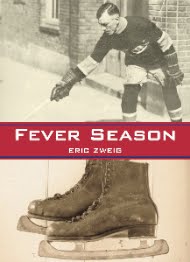
I always love to think about book pairs as I am reading. This week I just had the chance to read Fever Season by Eric Zweig. Even before I started to read the book, I thought about how it would be a good book to match up with Laurie Halse Anderson's Fever 1793. While Zweig's book is set during the early 1900s, including the time frame of World War I and Halse Anderson's book is set a little over a hundred years earlier, both books have themes dealing with fevers effecting main characters' lives and changing their family dynamics. It would be interesting for students to examine similarities and differences.

Beyond that, there are also possibilities to link to semi-current events. Last year around the time my students read Fever 1793 as a book club book, there was a lot of hype about the swine flu, especially in Mexico. I was also thinking that reading these book while we studied the Bubonic Plague in Medieval Europe earlier this year would have been a perfect fit.

Illnesses and how they effect communities is a recurring theme throughout history, and I am glad that I will have both of these books in my classroom library for all of the exciting possibilities.

Saturday, December 26, 2009

Bella at Midnight - Medieval Connections


I have been reading Bella at Midnight by Diane Stanley with a group of my 6th and 7th grade girls as part of a book club. With book clubs I have found that I love it most when I am reading the book for the first time along with my students, so that my comments are an authentic initial reaction, rather than rereading or trying to think back to a book that I read a while back. While I would not read aloud a book without first viewing it, I have come to see that it has been effective with book clubs. I had bought the book last year and did not have a chance to have a group read it yet.

It was a fun surprise as I started reading to notice that there were many connections to our social studies unit on Medieval Europe and even more exciting to see that the students brought up the link before I was even able to mention it. Many of the events and descriptions fit perfectly with our units on the structure of feudalism, daily life, chivalry, and the role of the church. The setting made the book even more engaging, as the students looked forward to picking up on these details while also discovering the direction the plot would go. The book would have been a fun read anyway, but I especially recommend it to other students who are studying Medieval Europe.

Thursday, December 24, 2009

The Chet Gecko Mystery Series


I just posted a brief review about the latest book in Bruce Hale's Check Gecko series, Dial M for Mongoose on my review site. I wanted to add a few more thoughts on this blog. Aside from being a quick-paced, humorous read from a series that my students from a range of reading levels read and loved last year, I also noticed that the book has a plethora of similes and metaphors. For my students who already love the series, I am glad to know that I will be able to use that hook to point out these literary devices.

Here are just a few of the examples from this book, but I assume that a quick skim of any of the books in the series would result in many more:

"But by this time, the odor had tiptoed on its little stink-footed feet throughout the class" (5).

"He was a tough-looking mole with a nose like an exploded eggplant and paws like a pair of catcher's mitts" (40).

"The heat swallowed me like a hungry python after a fast" (61).

Monday, November 30, 2009

The Unfinished Angel

I have not been posting as much about Teachable Moments in Literature as I had planned on when I first came up with the idea. I just finished reading The Unfinished Angel by one of my favorite authors Sharon Creech. I loved it just as much as I have loved all of Creech's books that I have read. I noticed that this book appears to be more accessible to students that are not reading at grade level than some of her other books. The book has short brief chapters but still leaves the reader with a lot to ponder.

Creech's craft leaves room for a lot of teaching points. In this book one that stands out is the use of onomatopoeia. Frequently throughout the book there are words to represent various sounds such as drums, a nail gun, a dog barking. As with many of Creech's books, it also uses some words from different languages. Since I work at a dual immersion school and students have a love of languages, I can show how Creech integrates different languages and what she does to help her readers who may not speak that particular language. The book is also an excellent opportunity to talk about moving a plot along and revealing the story bit by bit.

Wednesday, July 29, 2009

Geek High - Teachable Moments in Literature

In middle grades/YA novels it is common for the main characters to talk about school assignments. In Geek High by Piper Banks, Miranda is extremely talented in math, but she enjoys language arts more. She thinks the following when her crush who ended up dating her step-sister asked about the topic of her short story writing assignment, "This I didn't want to answer. Because my short story was about a girl whose boyfriend had been stolen away by her awful stepsister.And--other than the part where Emmett had never been my boyfriend, of course--I'd borrowed quite heavily from my own life to write it. At least, the emotions were all mine" (125). I will include this excerpt when we are doing our short fiction genre study and discussing how many authors draw on their real life experiences for ideas. In combination with author's notes at the end of fictional texts explaining connections to reality (such as Pam Muñoz Ryan's Esperanza Rising) we will look at this topic using different examples.

Monday, July 27, 2009

Breathing Comments Cont.

Yesterday I just posted about the wealth of teaching points available through Breathing. I emphasized one of the key opportunities being the use of dialect in the book. I was just skimming over old entries on Cheryl Renée Herbsman's blog and realized that she talked about the same concept of dialect and perceptions.

Sunday, July 26, 2009

Breathing - Teachable Moments in Literature

I recently wrote about not wanting to stop my reading for pleasure to take note of teaching points and the idea of having some of my favorite authors in mind to skim again for certain areas. I just thought of another way as well - I will start doing teachable moments in literature posts for books that really stand out to me with endless possibilities. I will kick off the concept with Cheryl Renée Herbsman's Breathing.

Right away I noticed main character Savannah's southern dialect in narration. When I went on exchange to University of Rhode Island my junior year in college for a semester, one of my professor's there sparked my interest in dialects. He told us about how linguists view all dialects as equal, but people often judge others based on how closely their language aligns with Standard American English. Since then, I have loved the area and most of my remaining major undergraduate projects and my Master's literature review all revolved around the area and the balance between having students see value in their dialect, while also preparing them to be successful. Breathing is an opportunity to both show how the use of dialect brings the book alive, as well as discussing academic vs. social voice in writing. Students will be able to see the advantage of understanding when it is appropriate to use their various registers and seamlessly move from one to the other depending on the purpose of their writing.

The book is also one more great example of using personal experiences to inspire fictional writing. Although I do not know how much of Herbsman's real life crossed over into the book, there is a cute picture of her and her husband as teenagers on the beach when they were dating. It also mentioned that they carried on a long-distance relationship as the two characters in the book.

When talking to students about adjusting their reading to match their purpose, this excerpt will be perfect:
In the summertime I generally like to read trashy books. [...] I never read that stuff during the year, but come summer, I can't help myself. For school I'm always having to get through the likes of David Copperfield or Romeo and Juliet, books where the English is so thick you've got to go over every paragraph six times before you understand what it is they're aiming to say. By the time summer comes around, my brain needs a rest (14-15)

It is also a great dialogue opener into enjoying books from different levels of difficulty and choosing books based on the match up between the level of support needed and the support available.

There is also a fun description of how Savannah and her brother Dog got their names. This will be perfect for Aimee Buckner's idea of History of a Name as part of launching a writer's notebook that she mentions in her Notebook Know-How: Strategies for the Writer's Notebook (15). I will use it along with an excerpt from The House on Mango Street.

One final lucky find was that Herbsman has a blog, and I just saw a post where she gives insights into her conversation about dialogue at her teen writing class.