Tuesday, July 17, 2012

Opening Minds Chapters 1-3


Returning to Opening Minds: Using Language to Change Lives by Peter H. Johnston after reading the first four chapters in March was on my summer to read list. Last night seeing Katie Keier's post about the #cyberPD conversations about the book was a perfect opportunity to pick it back up. Below are some of my reflections of the first three chapters, and you can see Cathy Mere's blog for a compilation of others' thoughts. As soon as I publish this post, I am excited to head over there and read through different lenses and join the conversations.


On page 1 I made a note in the margin, "Can already see why others read his Choice Words multiple xs." As I re-immersed myself in Johnston's thoughts I could feel the energy building. With lines like, "As teachers we choose our words and, in the process, construct the classroom worlds for our students and ourselves," (p. 1) I found myself seeing the power of coming back again and again. I remembered loving the first chapters back in March but it was even more powerful than I recollected. I thought about Katie's mentions of reading his Choice Words every summer. I can envision a new summer tradition for myself to re-energize with his words.

While reading, I was thinking about myself as a teacher, as well as a parent (my reflections last night prompted my slice for today). I was thinking about the range of influences on the children's lives with which we come into contact in order to understand our role in influencing the narratives of their lives or the potential need to overcome influences of narratives toward fixed learning. While reading Johnston's thoughts about fixed vs. dynamic learning theories, I think of so many connections - to workshop philosophy, to conversations about democratic education, to literature such as Fullan's about teachers as professionals, to Ali Edwards' nudges to explore and create enjoying the process without being solely focused on the final product.

I am thinking about the importance of on-going dialogues among staff to remind each other about the language we are using and the messages we send with the way we influence the culture of our schools. Specifically I am thinking about being intentional about the language I use with workshop mini-lessons, including sharing experiences about myself as a learner and focusing on the process of not allowing fear about the outcome of attempts to get in the way of learning or visions of the future. I am also thinking about book clubs and inquiry questions related to reading to focus on the dynamic nature of learning and growing.

I also thought about implications for older learners. Next fall, I will be teaching one course as an adjunct, development. I am planning on reading some excerpts for setting the tone for theories of learning and perceptions that kids have. I want them to have Johnston's ideas tumbling around in their  minds as they get ready to engage in a Kidwatching Kit assignment.

Johnston makes me think about myself as a teacher, as a pre-service teacher educator, as a parent, and as a learner. The implications of his words are vast. Johnston stated, "I help you make productive choices, because the language we choose in our teaching changes the worlds children inhabit now and those they will build in the future," (p. 7). I am excited to continue on with the rest of the book, ready to be continually inspired...


Saturday, July 14, 2012

Notice and Note - So Excited

Today I was on Heinemann's site seeing if there was a book that I would be able to get in order to use up my extra credit points that I had accumulated before they phased out that program. I was thrilled to get What Readers Really Do. It had caught my attention previously, but after reading Pat Johnson's thoughts about it on the Catching Readers blog, I knew I would want to read it.

Needless to say, finding out that I had enough credit points to get the book had me excited enough. Then I was skimming the new books and was even more excited to see that Notice and Note: Strategies for Close Reading by Kylene Beers and Robert Probst is now officially on the page, providing the first glimpses into the front cover, table of contents, a Notice & Note flyer...


I first heard about the ideas behind the book when I attended the Boothbay Literacy Retreat two years ago. I loved the concept from the start and their thoughts about what to notice while reading have changed the way that I read and have influenced mini-lessons that I have taught to middle schoolers. By looking over the flyer, it seems like Beers and Probst have continued to refine and craft the book. I noticed the subtitle is a clear link to the buzz about close reading with the common core. I look forward to see how it all came together.

I am going to go ahead and pre-order the book now (estimated publication of November 15, 2012). I will also be attending my first NCTE annual convention later in the month, so there's some fun treats in store for November!

Tuesday, July 10, 2012

Pathways to the Common Core: Accelerating Achievement


On Sunday I finished Pathways to the Common Core: Accelerating Achievement by Lucy Calkins, Mary Ehrenworth, and Christopher Lehman. It is amazing! I would highly recommend it as a starting point for deeply understanding the underlying values behind the standards as well as some research-based suggestions for implementing them. 

In contrast to some resources out there, one of the most valuable assets to this book is the prevalence of teachers as professionals with knowledge about their schools and students. This is one of many sections from the book that I loved, highlighting teacher knowledge, "Any educator who wants to play a role in shaping what happens in schools, therefore, needs a deep understanding of these standards. That understanding is necessary for anyone wanting to be a co-constructor of the future of instruction and curriculum and, indeed, of public education across America," (p. 1).  

Rather than trying to sell a rigid, one-size-fits all implementation, the authors provide experiences for teachers to understand the standards and then consider what would be the best for their schools and students by collaborating together, rather than working in isolation. They also highlight the advantage of gaining a deep knowledge of what the standards do and don't entail in order to critically examine what others market as Common Core aligned implementations or resources. 

In the introduction they also provide a nice overview of common statements against the CCSS (reading as curmudgeons) as well as tapping in to what is positive about them (reading as if they were gold). I appreciated the way they set this acknowledging that there are concerns, but then moving into a solution oriented framework for making some positive changes given our current context of education. Embedded in related discussions throughout the book, the authors provide background of where we have been and where we can go with this reform effort if we have sound implementations that rely on teachers as professionals. In my summer reading list, I mentioned that my doctoral program sparked my interest for school reform and cultures of change, especially for authors such as Michael Fullan. The type of professional cultures that Calkins, Ehrenworth, and Lehman advocate align with what I love about the literature in general, including some quotes from Fullan. 

One can read the book for personal understanding; however, also embedded is a nice layer of suggestions for leading discussions and experiences among staff in order to have a collective understanding of the standards in order to develop school-wide goals. I especially loved that they referenced many free resources available on the Teachers College Reading and Writing Project site.

Pathways to the Common Core will surely be one of those books that I will read again and again. As I continue to gear up for the school year, thinking about how I will improve my practice with the values of the Common Core in mind, I also want to revisit Supporting Students in a Time of Common Core: English Language Arts Grades 6-8 published by NCTE.

Thursday, July 5, 2012

Summer Reading

Yesterday I emailed my post-defense revised dissertation to my chair, and last week I finished up with the last of my commitments for my sabbatical replacement year. It feels like summer has arrived now. Aside from spending more time with the girls, blogging more regularly, and having more time for scrapbooking, I am looking forward to PD-related summer reading. This evening I saw a post from Katie over at the Catching Readers Before They Fall blog, and I thought it would be fun to also blog about books I would like to read.

Many of the books in my TBR pile are from favorite authors, as well as books that I started at least partially throughout the year but then for one reason or another did not end up getting to read fully. My plan will be to start and finish books in the pile rather than dabbling here and there as I have been for much of this year.

I decided to follow Katie's lead and post a picture of my book stack!

Right now I am reading Pathways to the Common Core: Accelerating Achievement by Lucy Calkins, Mary Ehrenworth, and Christopher Lehman. It is a must read for sure! I was excited for it from the time that it was first announced on Heinemann's site. Then reading Stacey's thoughts on the book earlier in the year made me even more excited. I have already been sharing some initial thoughts about the book with some of my colleagues. I told them that it is a much better starting point then the time-consuming process of unwrapping the standards, something that did not seem to be the best way to achieve the goal of deep understanding of standards with previous standards.

I am also excited to get back to Peter Johnston's Opening Minds. I mentioned reading it on my other blog back in March. At that time Stacey mentioned that she had read his other book multiple times, and I noticed that Katie had both of his books listed for this summer as well, noting that she always re-reads his Choice Words in the summer. I am thinking that I am going to have to get a copy of his first book.

Thomas Newkirk's The Art of Slow Reading seems like it is going to be a great fit to consider the question of what we value in reading as we make the transition to the common core playing a big role in the educational landscape. I also just really enjoy Newkirk's insights.

Kassia Wedekind's Math Exchanges is one that I am reading out of fascination of workshop possibilities in the math context even though I do not ever see myself being a math teacher, as well as thinking about implications as a mom and how I can support and value math at home in a way similar to what I already do for reading and writing.

I love all of Kelly Gallagher's books, so Teaching Adolescent Writers will be a real treat!

Through my doctoral program, I developed a larger interest in educational reform, and Michael Fullan is one of my favorite authors. He mentioned All Systems Go in a book that I was reading earlier this fall and Professional Capital is co-authored with his colleague Andy Hargreaves, who also co-authored the first Fullan book that I read. It was amazing seeing Fullan participate as discussant at a couple of sessions at AERA in April, as well as hearing Hargreaves on one of the panels.

Robert DuFour's name came up often as well in class discussions during my doctoral program, but I have not read any of his books before, so I chose Leaders of Learning that he co-authored with Marzano.


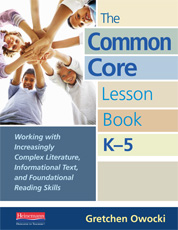
I also have books that I just moved from my office back to my classroom that I will want to get to read. Off the top of my head, I know for sure that I will want to read Jeff Anderson's 10 Things Every Writer Needs to Know and Gretchen Owocki's The Common Core Lesson Plan Book K-5. Like other books, I have read a little bit of both but then got swept up in the day to day to-do list that I did not get too far into them.


So many great books to read... We'll see how many I actually get to read this summer. Regardless, any leftover books means great fall reads!

What books are you hoping to read this summer?

Tuesday, June 19, 2012

Stenhouse Blogstitute 2012

I was excited to see that Stenhouse once again has a free summer blogsitute in the works. Starting Monday, June 25, there will be posts from the following educational leaders: Mark Overmeyer, Jeff Anderson, Kristi Lattimer and Kimberly Hill Campbell, Peter Johnston, and Charles Fuhrken, as well as sneak peeks from forthcoming videos from Debbie Miller on Math Work Stations, Chris Confer and Marco Ramirez, and Cris Tovani. I look forward to learning from some of my favorite authors, as well as getting to know more about the unique voices of those contributors with which I am not yet familiar. 

Last summer the blogsitute focused on writing. This summer will still include writing, but topics will expand to classroom talk, assessment, and math. While waiting for the new posts to begin, it is a great time to revisit last summer's posts from Maureen Barbieri, David Somoza, Carolyn Coman, Julie D. Ramsay, Kate Messner, Ruth Ayres, and Stacey Shubitz. I was just glimpsing back to Kate Messner's when she mentioned it as part of her Teachers Write! posts and remembered once again why I had loved it so much when it originally appeared.

A post on the Stenhouse blog announcing the blogstitute also mentions a 20% discount and free shipping on contributors' Stenhouse books and videos, making it a perfect time to buy some resources. Summer is always a time to re-energize, while having a chance to reflect and consider implications for the new school year. I look forward to seeing how the Stenhouse Summer Blogstitute is going to influence my thinking as a teacher.

Thursday, June 7, 2012

Teachers Write! Reflections So Far

Four days into the Teachers Write! summer institute hosted by Kate Messner, I wanted to pause to collect my thoughts thus far. After setting up my plan and writing about my childhood kitchen Monday evening, I have enjoyed the last three mornings starting my day by writing. I mentioned in my first post that I would want to reflect about what I am learning about myself as a writer in the process means for me as a writing workshop teacher.

Tuesday I completed the quick write related to location. I found myself writing about two different locations and then writing a list of other places that I could write about. I listed out different communities in which I have lived and listed out various locations. This process was the opposite of what I typically have my students do. I often lead them through a list before choosing ideas to do a quick write. I consider the list first as allowing them to think of many ideas and then having more thoughts collected to begin writing; however, now I am thinking about the possibilities of just choosing whatever first comes to mind and writing and how that process can prime the writer for then going to list out other possibilities. I am also thinking about mapping out/sketching the locations as I always enjoy.

This week is making me think about how often when I am in a timed situation that I do a quick list before transitioning to something else in order to capture all of those thoughts swirling around in my mind. I will also consider the implications for this in my classroom - allowing students to quickly jot down concluding thoughts before transitioning to the next class or to the next component of the day.

Yesterday I went back to the YA novel that I started a couple of  years ago. Each time I come back to it, I have to take some initial time to get to know my characters again and to remember what I even wrote in the first place! Each time this has happened, I realize how much I enjoy these characters. This time as I started re-reading I had my notebook in hand and started multiple pages - pages about characters, a page with questions I have, a page with areas I should research... I am finding that I am viewing the process different because of the entries on Ruth Ayres' blog and the way in which she talks about getting to know her characters.

Today I completed the quick write prompt from Margo Sorenson. It was related to a student in a library. I automatically knew that I wanted to write based on what a couple of former students mentioned in my dissertation interviews about their transition to high school. One did not go to the library all year because he was unsure of the whole process and another who disregarded it as not having his type of books after going to scan the shelves once. Both were avid readers who stopped reading because of access to books. I found that as I was doing my quick write, it seems flat. It does not have that strong voice yet. I realized that it was more about collecting the ideas.

As I was writing about how this composite character might have approached the library, I thought of how it would be nice to complement it with those who did go to the library regularly and who did find books that motivated them to read. One of my students did not go to the library until close to the end of the school year, but she mentioned another former student had been going since the start of the year. I started to imagine what it would have been like for that former student, considering it was probably a comfort zone with her transition.

I want to come back to these quick writes and develop them further - to consider their unique voices. I have always loved writing from multiple perspectives. Right now they are both in first person. I might even set it up where they see each other in the library. I am not sure whether or not they will interact. I will have to decide whether or not they know each other. So many thoughts and questions about who these characters are. That thinking will help lead me from my flat writing to writing with more voice. Part of the challenge is being inspired by the real life teens in my life but then disconnecting a bit in order to let the characters take shape as their own unique selves.

Thank you Kate, Margo, and all of the other authors who are contributing to the institute. It is definitely helping me stretch as a writer and reflect on implications for my classroom!

Monday, June 4, 2012

Teachers Write! 6/4/12

This has been a whirlwind year and I have been blogging far less than I would like to. Soon, I will be writing posts reflecting on what I have been learning this year, but for now, I want to get started on Kate Messner's virtual summer writing camp.

Today's Mini-Lesson Monday is about making time for writing. Here are my plans so far for the summer:

  1. I am at a natural transition with the end of the school year coming up and also wrapping up my dissertation (almost there!). At this point, rather than cutting back, I am at the point where I am carefully considering how I will use the time that is freeing up. Writing will be at the top of the list (as well as focusing on spending time with my daughters as writers).
  2. I would like to start each day with writing. I will set my alarm for 6 a.m., starting with a goal to write for fifteen minutes but will ideally build to a half an hour to an hour. This should allow me with some time prior to my family waking up in order to savor some writing time.
  3. I will typically write at my desk in my bedroom if I need to type (my laptop recently crashed). If I am writing by hand then I will typically go to the love seat in my living room.
  4. I have not had a chance to tell family and friends face-to-face, so announcing here on my blog is the first step to sharing my new plans. That seems like a natural step though as I am used to sharing with my on-line writing community for Slice of Life Stories.
I look forward to exploring and growing as a writer. There are so many choices as far as writing topics. I look forward to the prompts that will surely stretch me as a writer. I would also like to revisit Ruth Ayres' Discover. Play. Build. posts for inspiration, and I am also planning on doing the prompts for Ali Edwards' 31 Things class in July. Then there's my YA WIP (or maybe I should say WOP - work on pause as it has taken a complete back burner once I started my doctoral program). Throughout it all I will be reflecting on implications for my 6th-8th grade students and thinking about how I can foster a sense of passion toward writing.

And now because of a thunder storm, I better turn off my computer! A perfect reason to grab my writer's notebook and head for the couch. First, I will have to click over to see the prompt on Jo Knowles' blog as part of Teachers Write!